
Classification
Department
Smithsonian Collection
Museum
Smithsonian American Art Museum
Credit
Smithsonian American Art Museum
Accession Number
1967-58-1
Rights
Public Domain
About this artwork
Research in Progress
Art Historical Context
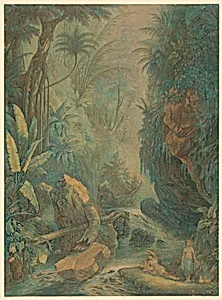
George Baxter (1804–1867) created this untitled print in 1856, now preserved in the Smithsonian American Art Museum. A British artist and inventor, Baxter developed an early color printing process that combined engraving with multiple wood and metal blocks to achieve vibrant hues without hand-coloring. His work helped bring affordable, high-quality images to a broader audience during the mid-Victorian period. Classified simply as a print, the piece reflects the growing importance of reproductive techniques in 19th-century visual culture. These methods allowed artworks and illustrations to reach everyday households, shaping public taste and education. Though research on this specific example continues, it stands as a quiet testament to the era’s technical ingenuity and the expanding role of printmaking in democratizing art. Visitors can appreciate how such works bridged fine art and popular media, influencing everything from book illustration to decorative prints. The Smithsonian’s collection preserves these contributions for ongoing study and enjoyment.