
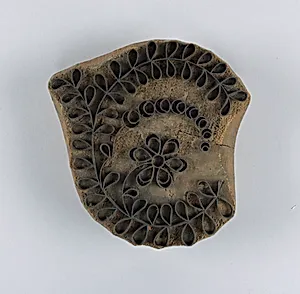
Printing block
1825–50
Medium
appliances & tools
Classification
appliances & tools
Department
Smithsonian Collection
Museum
Smithsonian American Art Museum
Credit
Smithsonian American Art Museum
Accession Number
1941-87-1-h
Rights
Public Domain
About this artwork
Research in Progress
Art Historical Context
This unassuming printing block, dating from 1825–50, offers a glimpse into the everyday artistry of early American industry. Crafted by an unknown maker, it belongs to the Smithsonian American Art Museum's collection of appliances and tools, highlighting how functional objects embodied creative design. Likely made of wood or similar material, such blocks were essential for transferring intricate patterns onto fabrics through hand-printing techniques, a labor-intensive process before mechanized printing dominated. In the mid-19th century, amid America's burgeoning textile trade, these blocks fueled the production of calicoes and other printed cloths that adorned homes and clothing across the nation. They reflect the blend of craftsmanship and commerce during the Industrial Revolution, where skilled artisans carved motifs—perhaps florals, geometrics, or patriotic symbols—directly into the block's surface for repeated use with dyes or inks. Though research on this specific piece is ongoing, it underscores the artistic ingenuity behind utilitarian tools. Today, displayed in the Smithsonian American Art Museum, this printing block invites us to appreciate the unsung heroes of design: objects that shaped American visual culture one impression at a time.
About the Artist
Unknown
The artist designated as "Unknown" in our virtual museum's collection exemplifies a poignant chapter in art history: creators whose identities have faded into obscurity despite the enduring power of their work. With only one known artwork attributed to them in our holdings, this figure represents countless anonymous hands that shaped visual culture across centuries. Museums worldwide, including th...