
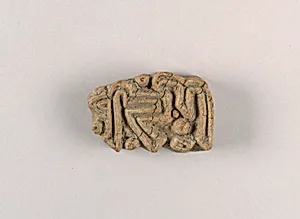
Printing block
14th century
Medium
appliances & tools
Classification
appliances & tools
Department
Smithsonian Collection
Museum
Smithsonian American Art Museum
Credit
Museum purchase from Au Panier Fleuri Fund
Accession Number
1960-147-4
Rights
Public Domain
About this artwork
Research in Progress
Art Historical Context
Step back to the 14th century with this intriguing *Printing block*, a functional artifact from the Smithsonian American Museum's collection. Acquired through the Au Panier Fleuri Fund this tool exemplifies early printing technology, likely carved from wood or similar material to transfer ink onto paper, fabric, or surfaces. Classified among appliances and tools, it bridges craftsmanship and innovation in a time when hand-carved blocks were essential for reproducing images, texts, and patterns before the advent of movable type. In the medieval era, printing blocks revolutionized communication and design, enabling the mass production of religious icons, playing cards, textiles, and early books across Europe and Asia. The meticulous carving required skilled artisans, blending artistic precision with practical utility—raised surfaces held ink while recessed areas stayed clean. Though the artist remains unknown and research is ongoing, this block highlights the era's technological leap, democratizing visual culture. Today, it invites us to ponder how such simple tools laid the groundwork for the printing revolution, preserving history one impression at a time. (198 words)
About the Artist
Unknown
The artist designated as "Unknown" in our virtual museum's collection exemplifies a poignant chapter in art history: creators whose identities have faded into obscurity despite the enduring power of their work. With only one known artwork attributed to them in our holdings, this figure represents countless anonymous hands that shaped visual culture across centuries. Museums worldwide, including th...