
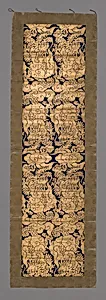
Probably a Temple Hanging (Altered)
late Edo period (1789–1868), 1801/33
Dimensions
86.1 × 276.9 cm (33 7/8 × 109 in.); Binding: H.: 14.7 cm (5 3/4 in.)
Classification
textile
Department
Textiles
Museum
Art Institute of Chicago
Accession Number
28947
Rights
Public Domain
Art Historical Context
This striking temple hanging, likely created during Japan's late Edo period (1789–1868) around 1801–1833, exemplifies the ornate textiles produced for Buddhist temple rituals. Measuring an impressive 86.1 × 276.9 cm (33⅞ × 109 in.), with a later binding of 14.7 cm (5¾ in.) height, its elongated form suggests it draped across temple interiors or processional spaces, enhancing sacred ceremonies with visual splendor. in the Art Institute of Chicago's Textiles department, it reflects the era's craftsmanship, when silk weaving and embroidery flourished amid Japan's isolationist policies, blending artistry with spiritual devotion. Though altered over time—possibly resized or repaired—the hanging retains its historical essence, offering a window into Edo-period temple culture. During this prosperous yet rigidly structured society, such textiles served not just decorative purposes but symbolic ones, invoking prosperity, protection, and enlightenment. Its unknown medium underscores the diversity of Japanese textile techniques, from intricate brocading to dyed motifs, which prioritized harmony of color and pattern. Visitors will appreciate how this artifact bridges the material and the mystical, surviving centuries to evoke the hushed reverence of temple halls. A testament to anonymous artisans' skill, it invites reflection on Japan's enduring textile legacy.
About the Artist
Unknown
The artist designated as "Unknown" in our virtual museum's collection exemplifies a poignant chapter in art history: creators whose identities have faded into obscurity despite the enduring power of their work. With only one known artwork attributed to them in our holdings, this figure represents countless anonymous hands that shaped visual culture across centuries. Museums worldwide, including th...