
Procession of the Emperor and His Suite
1626
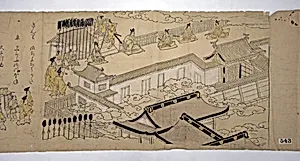
Medium
One of a set of two handscrolls; ink and color on paper, hand-tinted
Dimensions
Image: 10 1/4 in. × 41 ft. (26 × 1249.7 cm) overall (entire length): 10 1/4 in. × 43 ft. 4 1/16 in. (26 × 1321 cm)
Classification
Prints
Culture
Japan
Department
Asian Art
Museum
Metropolitan Museum of Art, New York, NY
Credit
Rogers Fund, 1927
Accession Number
27.95.2
Rights
Public Domain
Tags
Art Historical Context
Behold the majestic *Procession of the Emperor His Suite* (1626), a captivating handscroll from Japan's renowned Kano School, masters of decorative painting during the early Edo period. This exquisite work, one of a pair, unfolds over an astonishing 43 feet, depicting a grand imperial parade with the emperor at its heart, surrounded by his retinue amid architectural splendor. Rendered in ink, color, and hand-tinted paper, it captures the rigid hierarchy and ceremonial pomp of court life under the Tokugawa shogunate. As a handscroll (emakimono), it invites viewers to unroll it slowly, experiencing the procession's rhythm like a living narrative— a technique rooted in ancient Japanese storytelling traditions. The Kano School's bold lines and vibrant hues emphasize movement and scale, transforming the static medium into a dynamic spectacle. Classified among prints yet hand-tinted for added depth, it bridges painting and printmaking, showcasing innovative Edo-era artistry. Acquired through the Rogers Fund in 1927, this treasure at the Metropolitan Museum of Art offers a rare window into 17th-century Japan, where such processions symbolized imperial authority and social order. Imagine the silk-clad figures gliding past ornate buildings— a vivid reminder of harmony between ruler and realm.