
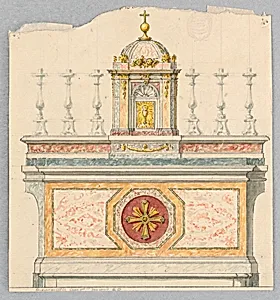
Project for an altar: intended to be executed with colored marble and gilded bronze
1780–1800
Medium
religion
Classification
religion
Department
Smithsonian Collection
Museum
Smithsonian American Art Museum
Credit
Museum purchase through gift of various donors
Accession Number
1901-39-2558
Rights
Public Domain
About this artwork
Research in Progress
Art Historical Context
This intriguing preparatory design, titled *Project for an Altar: Intended to be Executed with Colored Marble and G Bronze*, dates to the late 18th century1780–1800) and hails from the Smithsonian American Art Museum's collection. Created by an unknown artist, it represents a conceptual blueprint for a grand religious altar, showcasing the meticulous planning that went into ecclesiastical architecture during America's early republic era. At a time when the young nation was blending European influences with emerging national identity, such projects highlighted the aspiration for opulent sacred spaces amid post-Revolutionary growth. The specified materials—vibrant colored marble and shimmering gilded bronze—underscore the altar's intended splendor, evoking the neoclassical grandeur popular in both European and American religious art. Marble provided durability and visual richness, while gilding added divine luminescence, symbolizing heavenly glory. Though never realized, this design offers a window into the artistic techniques of the period, where drawings served as vital proposals for patrons, blending sculpture, architecture, and symbolism. Acquired through museum purchase with donor gifts and classified within the religion department, the piece is part of ongoing research, inviting visitors to ponder its untold story. It reminds us how unexecuted visions can still illuminate cultural devotion and craftsmanship from a formative American moment.
About the Artist
Unknown
The artist designated as "Unknown" in our virtual museum's collection exemplifies a poignant chapter in art history: creators whose identities have faded into obscurity despite the enduring power of their work. With only one known artwork attributed to them in our holdings, this figure represents countless anonymous hands that shaped visual culture across centuries. Museums worldwide, including th...