
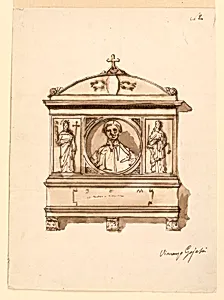
Project for an Epitaph in High Relief
Medium
architecture
Classification
architecture
Department
Smithsonian Collection
Museum
Smithsonian American Art Museum
Credit
Museum purchase through gift of various donors
Accession Number
1901-39-262
Rights
Public Domain
About this artwork
Research in Progress
Art Historical Context
**Project for an Epitaph in High Relief by Vincenzo Gajassi (1–1861), an Italian architect active in the early 19th century, to around 1840. Acquired by the Smithsonian American Art Museum generous donor gifts, this architectural project reflects the era's fascination with monumental commemoration. Gajassi, working in a period bridging Neoclassicism and emerging Romantic sensibilities, specialized in designs that blended sculpture and architecture, as seen in this proposal for a high-reliefaph—a raised, three-dimensional sculptural panel intended for a tomb or memorial. High relief, or *alto rilievo*, was a technique prized in Italian tradition for its dramatic depth and lifelike quality, allowing figures to project boldly from the surface much like classical Roman sarcophagi. This format elevated funerary art, turning personal memorials into public statements of grief, faith, or legacy. Gajassi's design exemplifies how 19th-century architects used such projects to innovate on historical motifs, adapting them for contemporary patrons amid Italy's political upheavals and cultural revival. Though research continues, this work offers a window into European architectural influence on global collections, highlighting the Smithsonian's commitment to diverse artistic heritage. Visitors can appreciate its intricate planning, evoking the solemn beauty of eternal remembrance.