
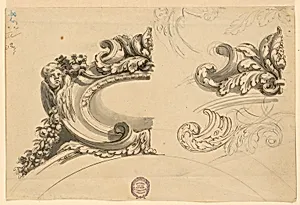
Project for Decorative Escutcheon
Classification
architecture
Department
Smithsonian Collection
Museum
Smithsonian American Art Museum
Credit
Museum purchase through gift of various donors
Accession Number
1901-39-1770
Rights
Public Domain
About this artwork
Research in Progress
Art Historical Context
Flaminio Innocenzizzi’s “Project forative Escutcheon captures the refined elegance of-eighteenth-century Italian. Created between 176 and 1780 the Bologna-born artist, architectural study reflects the period’s fascination with ornamental detail in public and private buildings. As a preparatory project rather than a finished work, it offers visitors a glimpse into how decorative motifs were conceived before being translated into stone, stucco, or metal. Minozzi lived during a time of shifting tastes, when Baroque exuberance gave way to lighter, more classical sensibilities. His escutcheon design would have served as a heraldic or symbolic element—often placed above doorways, on façades, or within interiors—to convey status and harmony. Although the exact medium remains undocumented, such projects were rendered in ink, wash, or chalk to communicate precise proportions and embellishments to craftsmen. Today the resides in the Smithsonian American Art Museum’s architecture holdings, acquired through the generosity of donors. Its presence reminds us that even the smallest decorative elements played an essential role in shaping the grandeur of eighteenth-century spaces.