
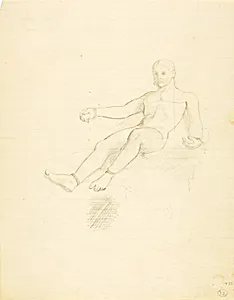
Prometheus
ca. 1861
Medium
Drawing
Classification
Drawing
Department
Smithsonian Collection
Museum
Smithsonian American Art Museum
Credit
Smithsonian American Art Museum, Gift of Pauline Page Howell
Accession Number
1973.183.35
Rights
Public Domain
Tags
Art Historical Context
In the Smithsonian American Art Museum's collection William Page's *Prometheus* (ca. 1861) stands as a compelling drawing study capturing the mythic Titan's torment. Page, a prominent 19th-century American artist known for his portraits and explorations of the human form, drew this nude figure bound in chains, evoking Prometheus's eternal punishment for defying Zeus by stealing fire for humanity. Created amid the tensions of the Civil War era, the work resonates with themes of rebellion, suffering, and resilience. As a preparatory drawing, it showcases Page's mastery of anatomical precision and expressive linework, essential techniques for artists studying the nude to convey emotion and movement. The stark depiction of imprisonment highlights the figure's muscular tension and vulnerability, blending classical mythology with Romantic intensity—a nod to Renaissance influences like Titian, whom Page admired. This gifted piece from Pauline Page Howell offers visitors a window into Page's process, reminding us how drawings like this bridged ancient lore and modern American art, inviting reflection on human endurance. (178 words)
About the Artist
William Page · 1811–1885
Comment on works: History; Portraits; Genre; Landscapes