
Prometheus
ca. 1861
Medium
Drawing
Classification
Drawing
Department
Smithsonian Collection
Museum
Smithsonian American Art Museum
Credit
Smithsonian American Art Museum, Gift of Pauline Page Howell
Accession Number
1973.183.36
Rights
Public Domain
Tags
Art Historical Context
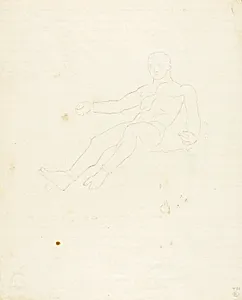
William Page's *Prometheus*, created around 1861, is a compelling drawing study from the Smithsonian American Art Museum collection. As a prominent 19th-century American artist known for his mastery of the human figure, Page captures the mythological Titan Prometheus in a moment of dramatic imprisonment. This nude study reflects the era's fascination with classical mythology, evoking the Greek legend where Prometheus was chained to a rock for defying the gods by giving fire to humanity—a symbol of rebellion, suffering, and enlightenment. Rendered in drawing medium, the work showcases Page's skill in anatomical precision and expressive linework, likely preparatory for a larger painting. The nude form emphasizes vulnerability and heroism, aligning with Romantic interests in the sublime human spirit amid personal and national turmoil, including the onset of the Civil War. Its classification as a study highlights the artist's process, inviting viewers to appreciate the raw energy of creation. Housed in the Smithsonian through a gift from Pauline Page Howell, this piece offers a window into Page's classical influences and enduring cultural resonance, reminding us of timeless themes of sacrifice and defiance.
About the Artist
William Page · 1811–1885
Comment on works: History; Portraits; Genre; Landscapes