
西王母図|Queen Mother of the West
first half of the 19th century
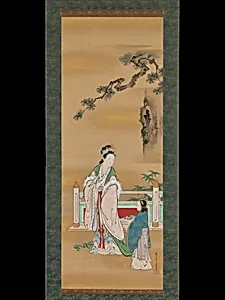
Medium
Hanging scroll; ink and color on silk
Dimensions
Image: 39 3/4 × 14 7/8 in. (101 × 37.8 cm) Overall with knobs: 73 3/4 × 22 in. (187.3 × 55.9 cm) Overall with mounting: 73 3/4 × 19 3/4 in. (187.3 × 50.2 cm)
Classification
Paintings
Culture & Period
Japan · Edo period (1615–1868)
Department
Asian Art
Museum
Metropolitan Museum of Art, New York, NY
Credit
The Howard Mansfield Collection, Purchase, Rogers Fund, 1936
Accession Number
36.100.99
Rights
Public Domain
Tags
Art Historical Context
This exquisite hanging scroll, *Queen Mother of the West* (西王母図), by Kano Osanobu, captures the divine elegance of Xi Wangmu, a revered Taoist goddess symbolizing immortality and feminine power. Created in the first half of the 19 century during Japan's Edo period1615–1868), it hails from the Kano school, a prestigious lineage of painters renowned for their vibrant, decorative style blending ink precision with bold colors. Osanobu's work reflects the era's cultural flourishing, where such scrolls adorned elite homes and temples, unrolled for ceremonial viewing. Rendered in ink and color on silk—a luxurious medium prized for its luminous sheen and ability to hold delicate gradations—the painting measures nearly 40 inches tall, emphasizing the goddess's majestic presence. The period's peace and prosperity allowed artists like Osanobu to draw on Chinese mythological influences, adapting Xi Wangmu into Japanese iconography as a beacon of spiritual longevity. Her depiction here, tagged with themes of women and deities, underscores the era's fascination with transcendent femininity. Part of The Metropolitan Museum of Art's Asian Art collection, gifted through The Howard Mansfield Collection in 1936, this scroll invites visitors to ponder the cross-cultural threads weaving East Asian divinity into everyday reverence.