
Qur'an Manuscript
Unknown Artist
15th–16th century
Medium
Ink, opaque watercolor, and gold on paper. Binding: leather; tooled and gilded
Dimensions
H. 16 1/2 in. (41.9 cm) W. 11 11/16 in. (29.7 cm)
Classification
Codices
Department
Islamic Art
Museum
Metropolitan Museum of Art, New York, NY
Credit
Rogers Fund, 1968
Accession Number
68.179
Rights
Public Domain
Tags
Art Historical Context
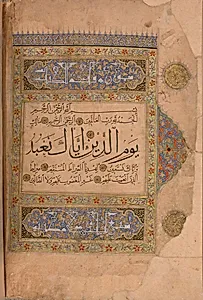
This exquisite Qur'an manuscript, dating to the 15–16th century, the pinnacle of Islamic calligraphy and book arts. Crafted by an unknown artist using ink, opaque watercolor, and gold on paper, a finely tooled and gilded leather binding it measures an impressive 16½ by 11⅝ inches. Housed in the Metropolitan Museum of Art's Art department (acquired through the Rogers in 1968), codex represents a complete sacred text, meticulously transcribed to honor the divine word of the Qur'an. In Islamic tradition, calligraphy was revered as the noblest art form, transforming written scripture into a visual prayer. The artist's mastery shines through flowing scripts adorned with intricate geometric and floral illuminations in vibrant colors and shimmering gold, which catch the light to evoke spiritual radiance. These techniques not only preserved the text but elevated it as a devotional object, often commissioned for mosques, madrasas, or elite patrons. Such manuscripts hold profound cultural significance, bridging faith, artistry, and scholarship during a golden age of Islamic book production in regions like the Ottoman Empire or Persia. Visitors can marvel at how every curve and flourish reflects centuries of reverence for beauty in the holy book.