
Rab
1896
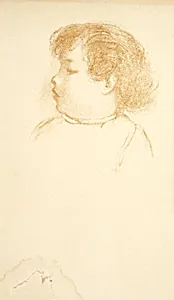
Medium
Graphic Arts-Print
Classification
Graphic Arts-Print
Department
Smithsonian Collection
Museum
Smithsonian American Art Museum
Credit
Smithsonian American Art Museum, Transfer from the Archives of American Art, Smithsonian Institution
Accession Number
1978.86.2
Rights
Public Domain
Tags
Art Historical Context
**Rab** (1896) by Arthur B. Davies is a striking graphic arts print from the Smithsonian American Art Museum's collection, capturing a bust portrait with intimate detail. Created early in Davies' career—this American artist (1862–1928) would later become a key figure in promoting modern art through the 1913 Armory Show—this work showcases his emerging talent for evocative imagery. Housed in the Smithsonian Collection and transferred from the Archives of American Art, it exemplifies the museum's commitment to preserving pivotal American prints. As a graphic arts print, *Rab* highlights the medium's revolutionary role in the late 19th century, when techniques like etching or lithography democratized art, allowing reproductions to reach broader audiences beyond elite patrons. Davies, influenced by Symbolist and Pre-Raphaelite aesthetics even in his youth, likely employed fine lines and subtle shading to convey depth and emotion in this bust, focusing on the subject's contemplative presence. The title "Rab" evokes a personal or narrative quality, inviting viewers to ponder the figure's story. This piece offers a window into turn-of-the-century American artistic experimentation, bridging traditional portraiture with emerging modernist impulses. A hidden gem for print enthusiasts, it reminds us how such works fueled cultural conversations in an era of rapid change.
About the Artist
Arthur B. Davies · 1862–1928
Arthur Bowen Davies (1862–1928) occupies one of the most paradoxical positions in American art history: a painter whose own canvases were lyrical, dreamlike, and rooted in the classical tradition, yet whose organizational energy and curatorial vision helped force American audiences into direct confrontation with the European avant-garde. Born on 26 September 1862 in Utica, New York, to English and...