
Rabbet Plane
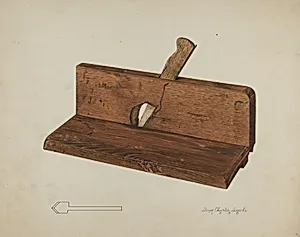
Medium
watercolor, graphite, and pen and ink on paperboard
Dimensions
overall: 28.2 x 35.6 cm (11 1/8 x 14 in.) Original IAD Object: 10" long; 3 3/8" high; 1" wide
Classification
Index of American Design
Department
CG-W
Museum
National Gallery of Art, Washington, D.C.
Credit
Index of American Design
Accession Number
1943.8.13305
Rights
Public Domain
Art Historical Context
**Rabbet Plane**Lloyd Charles Lemcke, 1938 Watercolor, graphite, and pen and ink on paperboard 28.2 × 35.6 cm (11⅛ × 14 in.) Index of American Design, National of Art Step into the inventive world of American craftsmanship with Lloyd Charles Lemcke's *Rabbet Plane* (1938), a rendered depiction of a classic woodworking tool. This rabbet plane, originally 10 inches long, 3⅜ inches high, and 1 inch wide, was designed for cutting precise grooves—or "rabbets"—essential for joinery in furniture and cabinetry. Lemcke's artwork captures its elegant form and functional beauty, highlighting the ingenuity of early American artisans who crafted such tools from wood and metal to meet everyday needs. Created as part of the Index of American Design (IAD), a New Deal-era Federal Art Project under the Works Progress Administration, this piece reflects the 1930s effort to document and celebrate the nation's folk art, crafts, and industrial design amid the Great Depression. Artists like Lemcke produced over 15,000 watercolor plates to preserve these cultural treasures, blending technical accuracy with artistic flair. His use of watercolor for subtle tones, graphite for fine details, and pen and ink for crisp lines brings the tool's contours to life on paperboard, making the ordinary extraordinary. Today, housed in the National Gallery of Art's collection, *Rabbet Plane* reminds us of America's hands-on heritage, where design served both utility and pride. It's a testament to how everyday objects embody our shared history. (218 words)
About the Artist
Lloyd Charles Lemcke · 1855–present
Lloyd Charles Lemcke was an American artist active around 1935, best known for his contributions to the Index of American Design, a Federal Art Project initiative under the Works Progress Administration (WPA) that aimed to document the nation's folk crafts and vernacular objects through precise artistic renderings. Little is known about Lemcke's early life or formal training, as biographical detai...