
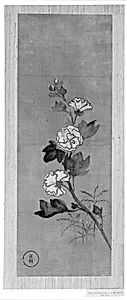
月に兎・牡丹・立葵図|Rabbits under the Moon, Peonies, and Hollyhocks
19th century
Medium
Set of three matted paintings; ink and color on paper
Dimensions
39 7/16 x 14 3/16 in. (100.2 x 36 cm)
Classification
Paintings
Culture & Period
Japan · Edo period (1615–1868)
Department
Asian Art
Museum
Metropolitan Museum of Art, New York, NY
Credit
Gift of Francis Lathrop, 1908
Accession Number
08.148.1–.3
Rights
Public Domain
Tags
Art Historical Context
Ogata Kōrin’s “Rabbits under the Moon, Peonies, and Hollyhocks” is a delicate set of three matted paintings created during Japan’s Edo period. Rendered in ink and color on paper, the works showcase the artist’s refined approach to nature, with the central theme of rabbits beneath a glowing moon flanked by lush peonies and upright hollyhocks. Kōrin, celebrated for his role in shaping the Rinpa aesthetic, brought an elegant, decorative sensibility to everyday floral and animal subjects, transforming them into harmonious compositions that emphasize rhythm and balance. In Edo-period Japan, such paintings often adorned the interiors of residences or temples, reflecting a cultural appreciation for seasonal motifs and the quiet poetry of the natural world. The combination of rabbits—linked in folklore to the moon—and flowering plants evokes themes of renewal and quiet beauty, inviting viewers to pause and contemplate the changing seasons. Though modest in scale, the set demonstrates Kōrin’s mastery of fluid brushwork and subtle color layering, qualities that continue to define Rinpa’s lasting influence on Japanese art. Today housed at the Metropolitan Museum of Art, these paintings offer modern audiences a glimpse into the refined visual language of the Edo era, where art and nature were seamlessly intertwined.
About the Artist
Ogata Kōrin · 1658–1716
Noted as one of the most important Japanese artists of the 17th century; known for paintings of irises and other subjects. He was regarded, along with Sotatsu, as one of the masters of the Sotatsu-Koetsu school of decorative painting, including painted screens and textile designs. He was descended from a samurai who had served under the Ashikaga rulers.