
Raising the Cross
c. 1490
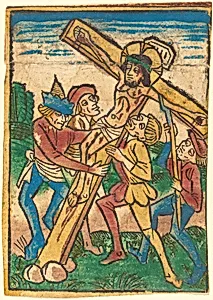
Medium
hand-colored woodcut
Classification
Department
CG-E
Museum
National Gallery of Art, Washington, D.C.
Credit
Rosenwald Collection
Accession Number
1943.3.9536
Rights
Public Domain
Art Historical Context
"Raising the Cross," a hand-colored woodcut from 1490 by an anonymous German artist of the 15th century captures a pivotal moment from the Passion of Christ. This dramatic scene, likely depicting the erection of the cross at Calvary, reflects the intense religious devotion of late medieval Northern Europe. Woodcuts like this were revolutionary, allowing intricate biblical narratives to reach a wide audience beyond the elite who could afford paintings or sculptures. The medium's significance lies in its innovative technique: carved wooden blocks inked and pressed onto paper, then meticulously hand-colored for vivid appeal. In 15th-century Germany, amid the dawn of the printing press, such prints democratized art, serving as affordable devotional aids in homes and churches. The bold lines and vibrant hues evoke the emotional power of Gothic altarpieces while heralding the Northern Renaissance's focus on detailed, expressive imagery. Housed in the National Gallery of Art's Rosenwald Collection (Department CG-E), this print exemplifies early graphic artistry. Its survival highlights the era's burgeoning print culture, bridging handmade illumination and mass production—a turning point that would transform visual storytelling forever. Visitors will appreciate its tactile charm and timeless spiritual resonance.
About the Artist
German 15th Century · 1400–1500
**German 15th Century** The designation "German 15th Century" encompasses a collective of anonymous artists active in the late medieval and early Renaissance periods in Germany, primarily known through their contributions to early printmaking and panel painting. These creators emerged during a transformative era when woodcuts and engravings began democratizing religious imagery, bridging the Goth...