
Rapier
Unknown Artist
19th century
Medium
Steel
Dimensions
L. 43 3/4 in. (111.1 cm); L. of blade 39 1/2 in. (100.3 cm); W. 9 in. (22.9 cm); D. 4 1/2 in. (11.4 cm); Wt. 2 lb. 5 oz. (1048.9 g)
Classification
Swords
Culture
Spanish
Department
Arms and Armor
Museum
Metropolitan Museum of Art, New York, NY
Credit
Gift of William H. Riggs, 1913
Accession Number
14.25.1029
Rights
Public Domain
Art Historical Context
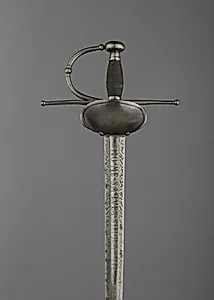
This elegant 19th-century Spanish rapier exemplifies the refined artistry of European arms-making, crafted from high-quality steel for both functionality and beauty. Measuring 43¾ inches in total length—with a 39½-inch blade—it's surprisingly lightweight at just over 2 pounds, allowing for agile thrusting and parrying. Its slender proportions (9 inches wide and 4½ inches deep at key points) highlight the rapier's design evolution from Renaissance dueling weapons into a symbol of martial prowess. In Spanish culture, rapiers like this one carried historical weight during a century marked by political upheaval and military tradition. Though rapiers peaked earlier, 19th-century examples often served ceremonial or fencing purposes, showcasing Spain's enduring swordsmithing heritage. The steel blade, likely forged with advanced tempering techniques for sharpness and flexibility, reflects the era's metallurgical innovations. A generous gift from collector William H. Riggs in 1913, this rapier now graces the Metropolitan Museum of Art's renowned Arms and Armor Department. It invites visitors to ponder the blend of lethal precision and aesthetic grace in historical weaponry, bridging art and history.