
Rapier
Unknown Artist
blade dated 1662
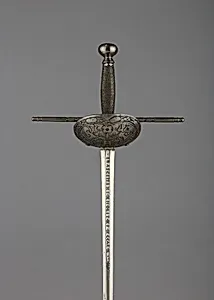
Medium
Steel
Dimensions
L. 39 3/4 in. (101 cm); L. of blade 35 in. (88.9 cm); W. 9 1/2 in. (24.1 cm); D. 4 3/4 in. (12.1 cm); Wt. 1 lb. 10 oz. (737.1 g)
Classification
Swords
Culture
Spanish
Department
Arms and Armor
Museum
Metropolitan Museum of Art, New York, NY
Credit
Gift of William H. Riggs, 1913
Accession Number
14.25.1086
Rights
Public Domain
Art Historical Context
This elegant Spanish rapier, with its blade dated 166, exemplifies the pinnacle of 17th-century arms craftsmanship from the Metropolitan Museum of Art Arms and Armor collection. an impressive overall length of 39¾ inches (101 cm)—with a slender 35-inch (88.9 cm) steel blade—this lightweight weapon (just 1 lb. 10 oz. or 737.1 g) was designed for precision thrusting, ideal for dueling and personal defense among Europe's nobility. Forged in steel, a medium prized for its durability and ability to hold a keen edge, the rapier reflects Spain's renowned metallurgical expertise during the Baroque era under the Habsburgs. By the mid-1600s, rapiers had evolved from Renaissance battlefield swords into sophisticated civilian sidearms, blending lethal function with ornate design potential—though this example's clean lines highlight practical artistry. A generous gift from collector William H. Riggs in 1913, this rapier invites us to ponder the artistry of survival, where every curve and balance served both life and legacy in a turbulent age.