
Rattle
Unknown Artist
ca. 1880
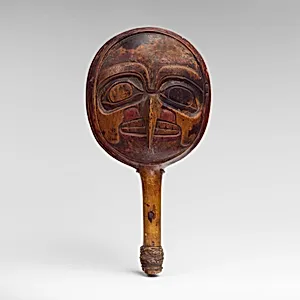
Medium
Wood, string, pigment
Dimensions
Height: 11 1/2 in. (29.2 cm) Diameter: 6 in. (15.2 cm)
Classification
Idiophone-Shaken-rattle
Culture
Native American (Haida or Tsimshian)
Department
Musical Instruments
Museum
Metropolitan Museum of Art, New York, NY
Credit
The Crosby Brown Collection of Musical Instruments, 1889
Accession Number
89.4.1963
Rights
Public Domain
Tags
Art Historical Context
This intricately carved wooden rattle, to around 1880, hails from the Native American cultures of the Haida or Tsimshian peoples of the Pacific Northwest Coast. Standing 11½ inches tall and 6 inches in diameter, is crafted from wood, adorned with pigment for vibrant coloration, and features string elements, classifying it as a shaken idiophone—a percussion instrument that produces sound through vibration of its own materials when shaken. Prominent faces, likely carved into the wood, evoke the rich symbolic iconography of Northwest Coast artistry, where such motifs often represented ancestral spirits or supernatural beings. Rattles like this held profound cultural importance, used in ceremonies, dances, and shamanic rituals to invoke spiritual powers and mark rhythmic accompaniment. The Crosby Brown Collection of Musical Instruments, acquired by the Metropolitan Museum of Art in 1889, preserves this artifact as a testament to the sophisticated craftsmanship of Indigenous Northwest Coast communities during a period of cultural transition amid European contact. Its presence in the museum's Musical Instruments department highlights the interplay of art and sound in Native American traditions, offering visitors a tactile glimpse into the auditory and visual worlds of Haida or Tsimshian life.