
Rebec
late 19th century
Medium
Wood, gut strings
Dimensions
L. 1 ft. 6 in., W. 5-1/2 in.
Classification
Chordophone-Lute-bowed-unfretted
Culture
Greek
Department
Musical Instruments
Museum
Metropolitan Museum of Art, New York, NY
Credit
The Crosby Brown Collection of Musical Instruments, 1889
Accession Number
89.4.982
Rights
Public Domain
Art Historical Context
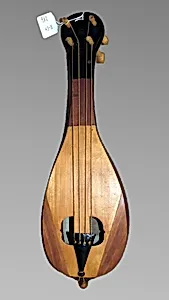
Nestled in the Metropolitan Museum of Art's Crosby Brown Collection of Musical Instruments, this late 19th-century rebec crafted by T. Maurouoff exemplifies exquisite Greek luthiery. Measuring 1 foot 6 inches in length and 5½ inches wide, the instrument is fashioned from wood with gut strings, reflecting traditional techniques honed over centuries in the Eastern Mediterranean. As a chordophone-lute-bowed-unfretted, it belongs to a family of pear-shaped, bowed string instruments that bridge folk traditions and classical music. The rebec, a precursor to the modern violin, was vital in Greek musical culture, often accompanying dances, laments, and celebrations in Ottoman-influenced regions. Maurouoff's workmanship highlights the artisan's skill in carving resonant wooden bodies to produce bright, piercing tones ideal for intimate gatherings. Gut strings, derived from animal intestines, offered exceptional responsiveness, allowing virtuosic expression through bowing without frets for continuous pitch variation. Acquired in 1889, this piece preserves a snapshot of 19th-century Greek heritage amid cultural transitions, inviting visitors to imagine its lively strains echoing through village festivals or urban cafes. A testament to craftsmanship, it underscores music's timeless role in cultural identity.