
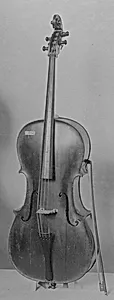
Violoncello
Unknown Artist
18th century
Medium
Wood, strings
Dimensions
L. 4 ft., W. 1 ft. 4-1/4 in., D. 4-3/4 in.
Classification
Chordophone-Lute-bowed-unfretted
Culture
German
Department
Musical Instruments
Museum
Metropolitan Museum of Art, New York, NY
Credit
The Crosby Brown Collection of Musical Instruments, 1889
Accession Number
89.4.1856
Rights
Public Domain
Art Historical Context
This elegant 18th-century Germanoncello, crafted from with strings, stands as a testament to the masterful luthiery of the Baroque era. Measuring 4 feet in length, 1 foot 4¼ inches in width, and4¾ inches in depth, its compact yet resonant form was designed for intimate chamber music and orchestral settings. Classified as a chordophone-lute-bowed-unfed instrument, it belongs to the violin family, where the unfretted fingerboard allows for nuanced intonation and expressive slides—hallmarks of the period's emotional depth in music. Hailing from Germany during a golden age of musical innovation, this violoncello would have accompanied composers like Bach and Telemann, its warm, rich tone piercing through ensembles. The unknown artisan's skill in selecting and shaping tonewoods ensured superior projection and sustain, techniques refined over centuries in European workshops. Part of The Crosby Brown Collection of Musical Instruments, acquired in 1889, it now resides in the Metropolitan Museum of Art's Musical Instruments department, offering visitors a tactile glimpse into how soundscapes shaped culture. Today, this violoncello invites us to imagine candlelit salons alive with melody, bridging craftsmanship and performance in a single, harmonious object.