
Receptacle for Peanut Oil
c. 1939
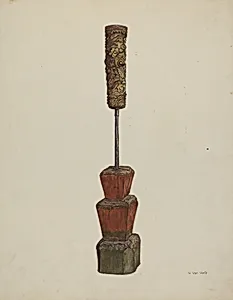
Medium
watercolor, graphite, and pen and ink on paperboard
Dimensions
overall: 35.5 x 28 cm (14 x 11 in.) Original IAD Object: 21 1/4" high; 2 5/8" wide
Classification
Index of American Design
Department
CG-W
Museum
National Gallery of Art, Washington, D.C.
Credit
Index of American Design
Accession Number
1943.8.13374
Rights
Public Domain
Art Historical Context
Visitors to the National Gallery of Art will delight in *Receptacle for Peanut*, a meticulous rendering by artist Vera Van Voris, created around 1939. This watercolor, graphite, and pen-ink work on paperboard (35.5 x 28 cm) captures a tall, slender vessel—originally 21¼ inches high and 2⅝ inches wide—likely a humble yet functional container from American folk tradition, evoking the everyday ingenuity of rural life, perhaps tied to Southern peanut cultivation. Van Voris contributed to the Index of American Design, a landmark Federal Art Project under the Works Progress Administration (WPA) during the Great Depression. Launched in 1935, this initiative employed artists to document America's rich heritage of crafts, folk art, and design through precise, colorful renderings. The mixed-media technique here—watercolor for vibrant tones, graphite and ink for sharp details—allowed for faithful reproduction, preserving objects that might otherwise fade from view. This piece highlights the cultural significance of utilitarian designs in American history, celebrating the artistry in ordinary tools. It reminds us how such projects not only provided jobs for artists but also fostered national pride in indigenous creativity during tough times. A true gem for design enthusiasts!
About the Artist
Vera Van Voris
Vera Van Voris is an artist whose works have been preserved in museum collections in sufficient number to indicate a serious and sustained artistic practice, even though her biographical details — birth and death dates, nationality, and the particulars of her training — remain undocumented in the standard art-historical literature. Her distinctive name suggests possible Dutch or Central European h...