
"Regular Contraband"
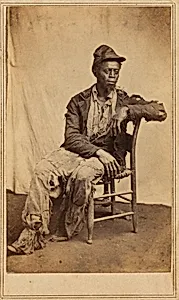
Medium
albumen print (carte-de-visite)
Dimensions
image/sheet: 8.9 × 5.5 cm (3 1/2 × 2 3/16 in.) mount: 10.1 × 6.1 cm (4 × 2 3/8 in.)
Classification
Photograph
Department
CPH
Museum
National Gallery of Art, Washington, D.C.
Credit
Pepita Milmore Memorial Fund
Accession Number
2018.95.3
Rights
Public Domain
Art Historical Context
"Regular Contraband," an albumen print carte-de-visite attributed to the Civil War-era photographers McPherson & Oliver 1863, captures a poignant moment from America's defining conflict. Produced in Washington, D.C., this tiny photograph—measuring just 8.9 × 5.5 cm on its sheet—exemplifies the carte-de-visite format, sensation in the 1860s akin to today's trading cards. These pocket-sized portraits, coated in egg-white albumen for luminous detail and warm tones, made photography accessible, allowing soldiers, families, and collectors to share images affordably. The title refers to "contrabands," the term Union generals coined for enslaved people fleeing to Northern lines, granting them freedom and often enlisting their labor or service. Likely depicting African American men in Union uniforms or work attire, this image documents their vital role in the war effort, from camp laborers to soldiers in United States Colored Troops units. McPherson & Oliver, part of the era's burgeoning photographic scene influenced by Mathew Brady, preserved such scenes amid rapid technological advances. Housed in the National Gallery of Art's photography collection through the Pepita Milmore Memorial Fund, "Regular Contraband" underscores photography's power as historical witness. Its intimate scale invites close inspection, revealing the humanity behind the struggle for emancipation and the Union's triumph. A testament to resilience, it reminds visitors of the unsung contributors to freedom.