
William Headley
c. 1864
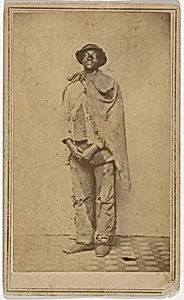
Medium
albumen print (carte-de-visite)
Dimensions
image/sheet: 9 × 5.5 cm (3 9/16 × 2 3/16 in.) mount: 10.1 × 6.1 cm (4 × 2 3/8 in.)
Classification
Photograph
Department
CPH
Museum
National Gallery of Art, Washington, D.C.
Credit
Ross J. Kelbaugh Collection, Purchased with support from the Ford Foundation
Accession Number
2023.39.56
Rights
Public Domain
Art Historical Context
This intimate carte-de-visite portrait, *William Headley* and created around 1864 by an anonymous American photographer, captures the era's fascination with photography as a democratic art form. Printed as an albumen print pioneering 19th-century process using egg whites to bind light-sensitive silver salts onto paper—this small image (9 × 5.5 cm) yields warm, rich tones and fine detail, mounted on a slightly larger card (10.1 × 6.1 cm) for easy handling and exchange. Invented in the 1850s by André-Adolphe-Eugène Disdéri, cartes-de-visite became a cultural phenomenon in the United States during the Civil War, serving as affordable "visiting cards" for soldiers, families, and celebrities. Affordable at pennies per dozen, they allowed ordinary people like Headley to preserve their likeness amid national upheaval, fostering personal connections across distances. Housed in the National Gallery of Art's CPH department from the Ross J. Kelbaugh Collection (purchased with Ford Foundation support), this photograph exemplifies mid-19th-century portraiture's shift from painted miniatures to mass-produced images, democratizing self-representation and preserving everyday histories.
About the Artist
American 19th Century · 1800–1900
The artist cataloged as "American, 19th Century" represents a collective of unidentified painters active in the United States during the nineteenth century, with 380 known artworks preserved in this virtual museum's collection. These works span a diverse array of genres typical of the era, including portraits, landscapes, still lifes, and genre scenes, reflecting the burgeoning artistic output of ...