
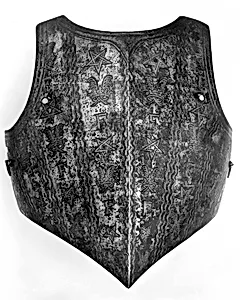
Reinforcing Breastplate
Unknown Artist
ca. 1625–30
Medium
Steel, silver
Dimensions
H. 16 in. (40.6 cm); W. 16 1/2 in. (41.9 cm); D. 11 in. (27.9 cm); Wt. 14 lb. 11 oz. (6662 g)
Classification
Armor Parts-Breastplates
Culture
Italian, probably Milan
Department
Arms and Armor
Museum
Metropolitan Museum of Art, New York, NY
Credit
Gift of William H. Riggs, 1913
Accession Number
14.25.867
Rights
Public Domain
Tags
Art Historical Context
This exquisite *Reinforcing Breastplate*, crafted around 1625–30 in Italy—likely Milan, a renowned center for armorer's art—exemplifies the pinnacle of Renaissance-era metalworking. Fashioned from steel with silver accents, it measures 16 inches high and weighs a hefty 14 pounds ounces, designed to bolster the chest protection of a cuirass. Its robust dimensions (16½ inches wide, 11 inches deep) underscore its role as a vital defensive layer, worn over primary armor to deflect blows from swords, lances, or early firearms during an age of evolving warfare. Milanese armorers were masters of combining functionality with artistry, often embellishing pieces with intricate emblems—symbolic motifs that might evoke heraldry, allegory, or military prowess. The silver inlays or gilding here would have caught the light on the battlefield, transforming mere protection into a statement of status and skill. Though the artist remains unknown, such works highlight the guild traditions of northern Italy, where steel was hammered, polished, and etched to near-sculptural perfection. Today, this breastplate graces the Metropolitan Museum of Art's Arms and Armor Department, a gift from William H. Riggs in 1913. It invites us to ponder the human ingenuity behind chivalric combat, bridging history's grit with timeless craftsmanship.