
Relief fragment
Unknown Artist
ca. 1961–1917 B.C.
Medium
Limestone
Dimensions
h. 25.4 cm (10 in); w. 28.6 cm (11 1/4 in)
Classification
Relief fragment
Period
Middle Kingdom
Department
Egyptian Art
Museum
Metropolitan Museum of Art, New York, NY
Credit
Bequest of Margaret L. Meiss, 1994
Accession Number
1994.496.3
Rights
Public Domain
Tags
Art Historical Context
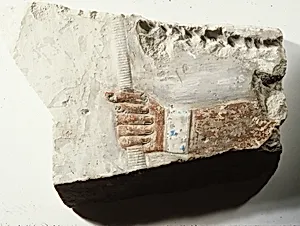
This limestone relief fragment, dating to Egypt's Middle Kingdom (ca. 1961–1917 B.C.) during Dynasty 12, offers a glimpse into one of ancient Egypt's golden ages. Crafted from fine-grained limestone—a favored medium for its carvability and durability—the piece measures just 10 by 11¼ inches, likely originating from a larger tomb or temple wall. Middle Kingdom art marked a revival after earlier turmoil, emphasizing refined realism and balanced compositions that celebrated pharaonic power and the afterlife. The fragment prominently features hands, a motif often seen in ritual scenes where figures offer food, incense, or adoration to deities or the deceased. Carved in the classic sunk-relief technique, where figures are incised below the surface for dramatic shadow play under Egypt's sunlight, it exemplifies the period's meticulous craftsmanship. Artisans achieved lifelike anatomy and gesture, blending symbolism with naturalism to ensure eternal sustenance for the tomb owner. Housed in the Metropolitan Museum of Art's Egyptian Art department through the bequest of Margaret L. Meiss in 1994, this modest survivor invites us to ponder the grandeur of lost monuments, reminding visitors of Egypt's enduring obsession with immortality.