
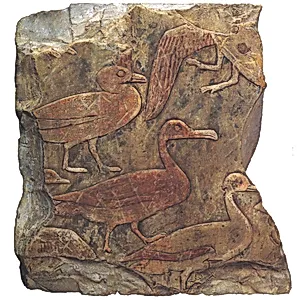
Relief Fragment Showing Waterfowl in a Clapnet
Unknown Artist
ca. 2020–2000 B.C.
Medium
Painted limestone
Dimensions
H. 15 x 13 in. (38 x 33 cm)
Classification
Relief, water fowl
Period
Middle Kingdom
Department
Egyptian Art
Museum
Metropolitan Museum of Art, New York, NY
Credit
Gift of Egypt Exploration Fund, 1906
Accession Number
06.1231.1
Rights
Public Domain
Tags
Art Historical Context
This captivating relief fragment from ancient Egypt's Middle Kingdom, dating to around 2020–2000 B.C. (Dynasty 11), depicts waterfowl ensnared in a clapnet—a clever trap that snaps shut to capture birds. Carved in limestone and vividly painted, it likely originated from a tomb wall, where such scenes symbolized abundance and the eternal provisioning of the afterlife. During Dynasty 11, Egypt was reunifying after chaos, and art like this celebrated the Nile's bounty, reflecting a society's deep connection to nature and the hunt. The medium of painted limestone was ideal for Egyptian reliefs: the stone's durability allowed precise carving of feathers, wings, and dynamic motion, while mineral-based pigments added lifelike color—blues and greens evoking marshy wetlands. These techniques highlighted the era's refined naturalism, bridging Old Kingdom formality with more expressive Middle Kingdom styles. As a gift to the Metropolitan Museum of Art from the Egypt Exploration Fund in 1906, this fragment offers a glimpse into daily rituals turned eternal. Bird motifs, especially in fowling scenes, underscored fertility and renewal, reminding visitors of Egypt's masterful blend of art, ritual, and reverence for life's cycles.