
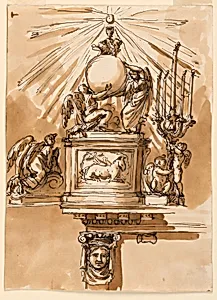
Relief; Glory of the sacrament; console table
1780–1790
Classification
architecture
Department
Smithsonian Collection
Museum
Smithsonian American Art Museum
Credit
Museum purchase through gift of various donors and from Eleanor G. Hewitt Fund
Accession Number
1938-88-1922
Rights
Public Domain
About this artwork
Research in Progress
Art Historical Context
Giuseppe Barberi, a Italian architect and designer (6–1809), this intricate *Relief; Glory of the Sacrament Console Table* between 1780 and 1790, during the height of Neoclassicism in Rome. Barberi was renowned for his elegant architectural ornaments and furniture designs, blending classical motifs with refined craftsmanship. This piece, classified as architecture, likely served as a decorative relief for a console table, evoking grandeur of ecclesiastical interiors where such elements adorned altars or lavish furnishings. The title hints at a celebratory religious theme centered on the Eucharist—"Glory of the Sacrament"—a motif deeply rooted in Catholic tradition, symbolizing divine mystery and spiritual triumph. Crafted in an era bridging Baroque exuberance and Neoclassical restraint, the relief exemplifies Barberi's skill in low-relief sculpture, emphasizing clarity, proportion, and symbolic depth to inspire awe and devotion. Acquired through museum purchase with gifts from various donors and the Eleanor G. Hewitt Fund, this work now graces the Smithsonian American Art Museum's collection. Though research continues, it offers a window into 18th-century Italian design's fusion of faith, artistry, and architecture, reminding visitors of the era's opulent patronage of sacred themes.