
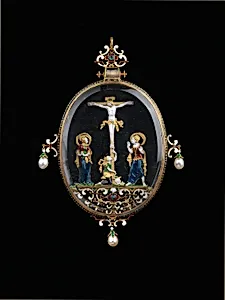
Reliquary Pendant
1500-1600
Medium
Decorative Arts-Jewelry
Classification
Decorative Arts-Jewelry
Department
Smithsonian Collection
Museum
Smithsonian American Art Museum
Credit
Smithsonian American Art Museum, Gift of John Gellatly
Accession Number
1929.8.206
Rights
Public Domain
Tags
Art Historical Context
Nestled in the Smithsonian American Art Museum's collection decorative arts, this *Reliquary Pendant* from 1500–1600 exemplifies the exquisite jewelry of the Renaissance era. Craft by an unidentified artist, it served a deeply spiritual purpose: a small, wearable container designed to house holy relics—fragments of saints' bones, cloth, or other sacred objects. Worn as a necklace pendant, it blended personal devotion with elegant adornment, allowing the faithful to carry divine protection close to the heart. During the 16th century, the Catholic Reformation and Renaissance humanism, such pendants surged in popularity across Europe. They reflected the era's masterful metalworking techniques, often featuring intricate goldsmithing, enameling, and gem settings to create locket-like compartments. This piece highlights jewelry's dual role as both luxury item and pious accessory, bridging art, faith, and fashion in turbulent times of religious upheaval. Generously gifted to the museum by collector John Gellatly, the pendant invites us to ponder the intimate spirituality of Renaissance life. Though its exact origins remain mysterious, it stands as a tangible link to a world where beauty safeguarded the soul.
About the Artist
Unidentified ( ) · –