
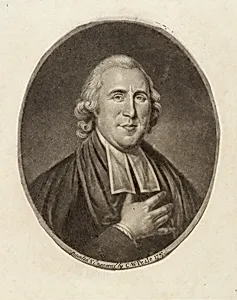
Rev. Joseph Pilmore
Medium
Graphic Arts-Print
Classification
Graphic Arts-Print
Department
Smithsonian Collection
Museum
Smithsonian American Art Museum
Credit
Smithsonian American Art Museum, Gift of International Business Machines Corporation
Accession Number
1966.48.84
Rights
Public Domain
Tags
Art Historical Context
Behold *Rev. Joseph Pilmore (1787), a graphic arts print by Charles Willson Peale, one of America's foremost early portraitists. Capturing the bust of the Reverend Joseph Pilmore, an influential Anglican clergyman who arrived in the colonies in 1769 as a Methodist missionary alongside Francis Asbury, this work reflects the post-Revolutionary era's blend of religious fervor and national identity. Pilmore's role in bridging Methodism and the emerging Episcopal Church underscores the evolving spiritual landscape of the young United States. Peale, renowned for his realistic portraits of Founding Fathers and intellectuals, employed meticulous engraving techniques in this print medium to reproduce fine details—like the reverend's dignified attire and serene expression—making high-quality likenesses accessible beyond oil paintings. As a key figure in the American Enlightenment, Peale's works often celebrated civic and moral leaders, and this print exemplifies his skill in graphic arts, distributed through institutions like the Smithsonian American Art Museum. Housed in the Smithsonian's collection through a gift from IBM, this piece highlights the cultural reverence for clergy who shaped early American faith communities. Visitors will appreciate how it immortalizes Pilmore's legacy, inviting reflection on faith's enduring role in our nation's history.
About the Artist
Charles Willson Peale · 1741–1827
Charles Willson Peale (1741–1827) was an American painter, museum founder, naturalist, and inventor who became the most important American portraitist of the Revolutionary era and a central figure in the cultural life of the young republic. Born in Queen Anne's County, Maryland, he initially trained as a saddler before turning to painting, studying briefly with John Singleton Copley in Boston and ...