
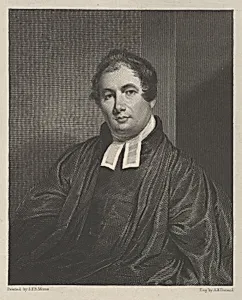
Rev. William Buell Sprague
Medium
Engraving; second state of three
Dimensions
plate: 9 5/8 x 6 5/8 in. (24.4 x 16.9 cm)
Classification
Prints
Department
Drawings and Prints
Museum
Metropolitan Museum of Art, New York, NY
Credit
Gift of Mrs. Frederic F. Durand, 1930
Accession Number
30.15.43
Rights
Public Domain
Tags
Art Historical Context
This elegant engraving, titled *Rev. William Buell*, captures the dignified likeness of a prominent 19th-century American Presbyterian minister. Created in 1834 by B. Durand and Samuel F B. Morse—two luminaries of the American art scene—it represents the second state of three in the edition. Measuring 9⅝ × 6⅝ inches, the plate exemplifies the precision of 19th-century printmaking, allowing for multiple impressions to widely distribute images of notable figures like Rev. Sprague, a respected cleric known for his influential sermons and writings. Engraving, the medium here, involved incising fine lines into a metal plate with a burin, a technique Durand mastered early in his career before pioneering the Hudson River School landscape style. Morse, famed for portraits and later as the telegraph's inventor, likely contributed the original design, reflecting their collaborative spirit in early American art. This portrait belongs to a tradition of disseminating reverend portraits, making ecclesiastical leaders accessible to congregations and the public amid rising literacy and print culture in antebellum America. Housed in the Metropolitan Museum of Art's Drawings and Prints department (gift of Mrs. Frederic F. Durand, 1930), it highlights how prints democratized portraiture, bridging fine art and everyday devotion. Visitors will appreciate its crisp lines and introspective gaze, evoking the moral authority of its subject.
About the Artist
Asher Brown Durand|Samuel F. B. Morse|Rev. William Buell Sprague · 1796–1886
Was a principal member of the Hudson River School. American artist; associated with the Hudson River School of landscape painting. Comment on works: Portraits