
Reverend William White
Medium
Classification
Department
Smithsonian Collection
Museum
Smithsonian American Art Museum
Credit
National Portrait Gallery, Smithsonian Institution; gift of Milton and Ingrid Rose
Accession Number
NPG.96.138
Rights
Public Domain
Tags
Art Historical Context
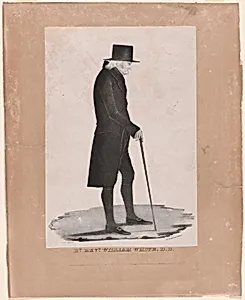
Behold the striking 1838 print *Reverend William White* by Albert Newsam, a masterful American lithographer (1809–1864) celebrated for his detailed portraits of prominent figures. Captured in the Smithsonian American Art Museum's collection—on loan from the National Portrait Gallery—this work depicts the esteemed Episcopal bishop in formal attire, complete with top hat and cane, exuding dignity and authority. Newsam's skill in lithography, a revolutionary printing technique of the era, allowed for precise reproductions that brought elite likenesses to a wider audience. William White (1748–1836), the first Bishop of Pennsylvania and a key religious leader in early America, symbolized the nation's emerging Protestant establishment. As chaplain to the Continental Congress and a founder of the Protestant Episcopal Church, White bridged revolutionary ideals with spiritual guidance. This posthumous portrait, created two years after his death, honors his legacy as a religious writer and influential cleric. Newsam's crayon lithography technique shines here, blending the intimacy of drawing with print's accessibility—ideal for disseminating images of cultural icons during America's antebellum portraiture boom. A gift to the Smithsonian from Milton and Ingrid Rose, this piece invites visitors to reflect on faith, leadership, and 19th-century visual culture.