
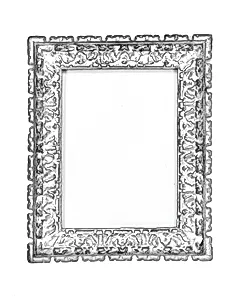
Reverse cassetta frame
Unknown Artist
1630–40
Medium
Poplar
Dimensions
Overall: 19 1/2 × 23 13/16 in. (49.5 × 60.5 cm) Sight: 12 1/16 × 16 9/16 in. (30.6 × 42 cm) Rabbet: 14 5/8 × 19 in. (37.2 × 48.3 cm)
Classification
Frames
Culture
Italian, Naples (?)
Department
Robert Lehman Collection
Museum
Metropolitan Museum of Art, New York, NY
Credit
Robert Lehman Collection, 1975
Accession Number
1975.1.2335
Rights
Public Domain
Art Historical Context
This exquisite *Reverse cassetta frame*, crafted around 1630–40 in, Italy (?), exemplifies the refined woodworking traditions of the early Baroque period. Made from poplar—a lightweight, carvable wood favored by Italian framemakers—the frame measures 19½ × 23⅞ inches overall, with a sight opening of 12 × 16½ inches designed to elegantly encase a painting. Its "reverse cassetta" design an inverted profile, where the central hollow creates a subtle shadow play, drawing the viewer's eye inward and enhancing the artwork it holds. In 17th-century Italy, especially vibrant Naples under Spanish influence, frames like this were not mere supports but integral to a painting's presentation, transforming canvases into architectural jewels. The deep moldings and precise rabbet (14⅝ × 19 inches) reflect masterful joinery techniques, ensuring stability and opulence. Part of the Robert Lehman Collection at The Metropolitan Museum of Art since 1975, this anonymous masterpiece highlights how frames elevated domestic and ecclesiastical art, blending functionality with sculptural beauty. (178 words)