
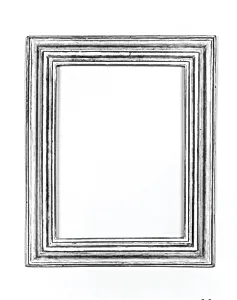
Reverse frame
Unknown Artist
1680–1700
Medium
Poplar
Dimensions
Overall: 26 3/8 × 21 5/8 in. (67 × 55 cm) Sight: 19 7/16 × 14 1/2 in. (49.3 × 36.8 cm) Rabbet: 20 15/16 × 16 1/4 in. (53.2 × 41.2 cm)
Classification
Frames
Culture
Italian, Rome
Department
Robert Lehman Collection
Museum
Metropolitan Museum of Art, New York, NY
Credit
Robert Lehman Collection, 1975
Accession Number
1975.1.2187
Rights
Public Domain
Art Historical Context
This exquisite *Reverse frame*, crafted in Rome between 1680 and 1700, exemplifies the masterful woodworking traditions of late Baroque Italy. Made from poplar—a lightweight, easily carved wood favored by Italian framemakers for its workability—the frame measures 26 3/8 × 21 5/8 inches overall, with a sight size of 19 7/16 × 14 1/2 inches, designed to elegantly encase a painting or mirror. Now part of the Metropolitan Museum of Art's Robert Lehman Collection (acquired in 1975), it invites us to appreciate frames not merely as supports, but as standalone artworks that enhanced the grandeur of ecclesiastical and domestic interiors. In the vibrant artistic hub of Rome during this period, frames like this one were essential complements to opulent paintings by masters such as Carlo Maratta or Baciccio. The "reverse" designation likely refers to its distinctive profile, where the molding recedes inward, creating a subtle depth that draws the eye toward the artwork within. Poplar's smooth grain allowed for precise rabbet dimensions (20 15/16 × 16 1/4 inches), ensuring a custom fit. Though by an unknown artisan, it reflects the anonymous yet skilled labor of Roman workshops, where such frames underscored the era's theatrical emphasis on light, shadow, and illusion. Today, this frame stands as a testament to Italy's enduring legacy in decorative arts, reminding visitors how even the humble surround could elevate the divine drama of Baroque masterpieces.