
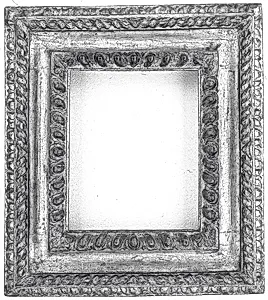
Reverse hollow frame (pair with 1975.1.2080)
Unknown Artist
ca. 1710
Medium
Poplar
Dimensions
Overall: 21 5/8 × 19 3/8 in. (55 × 49.2 cm) Sight: 11 9/16 × 9 7/16 in. (29.4 × 24 cm) Rabbet: 12 5/16 × 9 15/16 in. (31.3 × 25.2 cm)
Classification
Frames
Culture
Italian, Sicily
Department
Robert Lehman Collection
Museum
Metropolitan Museum of Art, New York, NY
Credit
Robert Lehman Collection, 1975
Accession Number
1975.1.2081
Rights
Public Domain
Art Historical Context
This exquisite reverse hollow frame, crafted around 1710 in Sicily, Italy, exemplifies the ornate woodworking traditions of the early 18th century. Made from poplar—a lightweight, fine-grained hardwood favored by Sicilian artisans for its carvability and resistance to warping—the frame features precise dimensions tailored to encase artworks with elegance. Its overall size of 21⅝ × 19⅜ inches (55 × 49.2 cm) frames a sight area of 11½ × 9½ inches (29.4 × 24 cm), with a rabbet depth ensuring a secure fit for paintings or mirrors. As part of a matched pair (with 1975.1.2080), it reflects the period's emphasis on symmetry and grandeur in interior decoration. In Sicilian culture under Spanish and later Bourbon influences, such frames were essential to Baroque interiors, elevating religious icons, portraits, or landscapes in palazzos and churches. The "reverse hollow" profile—a distinctive molding with an inward-curving hollow—added depth and shadow play, enhancing the illusionistic effects popular in the era's art. Though the artist remains unknown, the frame's survival highlights the skill of anonymous craftsmen whose work supported Italy's rich pictorial heritage. Now housed in the Metropolitan Museum of Art's Robert Lehman Collection (acquired 1975), this piece invites us to appreciate the unsung frames that have protected and framed masterpieces for centuries, offering a window into Sicily's vibrant decorative arts.