
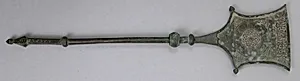
Rice Server Inscribed in Arabic with Good Wishes
Unknown Artist
12th century
Medium
Brass; cast, chased
Dimensions
H. 22 7/8 in. (58.1 cm) W. 5 1/2 in. (14 cm) D. 1 1/8 in. (2.9 cm) Wt. 1.8lb. (0.8kg)
Classification
Metal
Department
Islamic Art
Museum
Metropolitan Museum of Art, New York, NY
Credit
Fletcher Fund, 1975
Accession Number
1975.266
Rights
Public Domain
Tags
Art Historical Context
This elegant 12th-century brass server, standing nearly 23 inches tall, exemplifies the exquisite metalwork of the Islamic world. Crafted using the cast-and-chased technique—where molten brass is poured into a mold and meticulously engraved with fine tools—the vessel features a slender, elongated form ideal for scooping and serving rice, a staple in medieval Middle Eastern cuisine. Its lightweight design (just 1.8 pounds) made it practical for daily use, blending functionality with artistry. The server's surface bears Arabic inscriptions conveying good wishes, a hallmark of Islamic decorative arts where calligraphy transformed everyday objects into vessels of blessing and beauty. Produced during a golden age of Islamic craftsmanship, likely in regions like Syria or Iran, such pieces highlight the era's mastery of brassworking, often rivaling ceramics or textiles in refinement. Inscriptions not only served aesthetic and spiritual purposes but also reflected cultural values of hospitality and piety. Today, this rare survivor graces the Metropolitan Museum of Art's Islamic Art department, acquired through the Fletcher Fund in 1975. It invites visitors to ponder how art permeated medieval life, turning a simple utensil into a timeless emblem of goodwill.