
Ring Fragment
Unknown Artist
ca. 1390–1352 B.C.
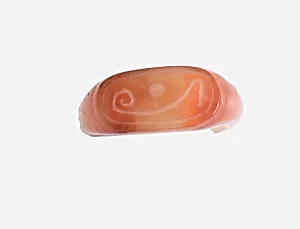
Medium
Carnelian
Dimensions
Diam. 2 cm (13/16 in)
Classification
Ring fragment
Period
New Kingdom
Department
Egyptian Art
Museum
Metropolitan Museum of Art, New York, NY
Credit
Rogers Fund, 1911
Accession Number
11.215.123
Rights
Public Domain
Art Historical Context
This delicate ring fragment, dating to around 1390–1352 B.C., hails from Egypt's New Kingdom during Dynasty 18—a golden age of imperial power and artistic splendor under pharaohs like Amenhotep III. Crafted from carnelian, a vibrant red-orange semi-precious stone prized by ancient Egyptians for its blood-like hue symbolizing vitality, protection, and the sun god Ra, this tiny piece (just 2 cm in diameter) offers a glimpse into elite jewelry traditions. Such rings were not mere adornments but multifunctional seals, often inscribed with royal names or motifs to authenticate documents or signify status. Carnelian's durability and luster made it ideal for carving intricate designs, though this fragment's precise motifs remain a mystery, inviting us to ponder its original form—likely part of a bezel from a finger ring or signet. In a society where jewelry warded off evil and connected wearers to the divine, objects like this bridged the earthly and eternal, reflecting the era's obsession with eternity and rebirth. Acquired through the Rogers Fund in 1911, this artifact now graces the Metropolitan Museum of Art's Egyptian Art collection, reminding visitors of the New Kingdom's masterful lapidary skills and the enduring allure of ancient craftsmanship.