
Ring Stone
Unknown Artist
probably 10th century
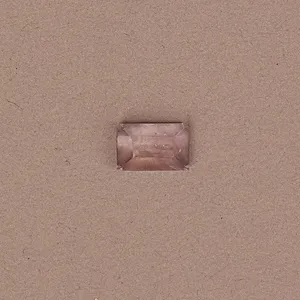
Medium
Amethyst; cut and polished on rotary flat lap
Dimensions
Ht. 3/16 in. (0.5 cm) W. 7/16 in. (1.1 cm) D. 1/4 in. (0.7 cm)
Classification
Jewelry
Department
Islamic Art
Museum
Metropolitan Museum of Art, New York, NY
Credit
Rogers Fund, 1948
Accession Number
48.101.62b
Rights
Public Domain
Art Historical Context
This exquisite ring stone, crafted from amethyst in the 10th century, exemplifies the refined lapidary arts of the Islamic world. just 0.5 cm high, 1.1 cm wide, and 0.7 cm deep, this petite gem was likely designed to be set into a signet ring, a common accessory for sealing documents or personal adornment. Acquired through the Rogers Fund in 8, it now graces the Islamic Art department at the Metropolitan Museum of ArtThe stone's medium—amethyst, prized for its rich purple hue—underwent precise cutting and polishing on a rotary flat lap, a technique that reveals the sophistication of medieval Islamic gem-working. This method, using a rotating wheel with abrasives, allowed artisans to achieve a smooth, lustrous finish on hard stones like quartz varieties, showcasing technical mastery during the Abbasid era or regional contemporaries. In Islamic culture, such ring stones held practical and symbolic value, often serving as personal seals or talismans. Amethyst's durability and beauty made it ideal for jewelry, blending utility with aesthetic elegance in everyday elite life. A testament to anonymous craftsmanship, this piece invites us to marvel at the intricate world of 10th-century Islamic artistry.