
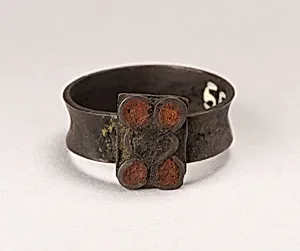
Ring with Inlay
Late 15th–16th century
Medium
Silver with inlay
Classification
metal
Department
Arts of the Americas
Museum
Art Institute of Chicago
Accession Number
126550
Rights
Public Domain
Art Historical Context
This exquisite **Ring with Inlay**, crafted by Inca artisans in the late 15th–16th century, exemplifies the unparalleled metalworking prowess of the Inca Empire in the Andes. Made of silver adorned with intricate inlays—likely of shell, stone, or other colorful materials—this piece from the Art Institute of Chicago's Arts of the Americas collection was probably worn by nobility or priests, symbolizing status and spiritual power during the empire's zenith under rulers like Pachacuti and Huayna Capac. Inca metalworkers were masters of lost-wax casting and depletion gilding, but their inlay technique stands out: channels were meticulously carved into the silver, filled with contrasting materials, and polished to a luminous finish. This not only created visually striking patterns but also evoked the cosmos, animals, or geometric motifs central to Inca cosmology. Spanning the era just before Spanish conquest in 1532, such jewelry reflects a culture that amassed vast silver reserves from mines like Potosí, channeling them into art that blended utility, beauty, and ritual. Today, this ring offers a tangible link to Inca ingenuity, reminding us how pre-Columbian societies rivaled Eurasian contemporaries in technical sophistication. A true treasure for any visitor! (198 words)
About the Artist
Inca
Inca artists, operating anonymously within the vast Inca Empire from approximately 1425 to 1532 CE, were masterful creators whose works symbolized imperial power and unity across the Andes. Thriving in the heart of Cuzco, the empire's capital, these skilled artisans—men and women alike—produced textiles, ceramics, and metalwork that served both practical and ceremonial purposes. Gifted craftspeopl...