
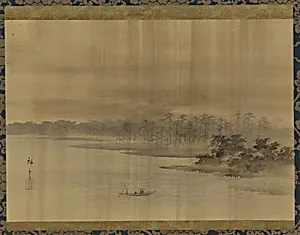
River landscape and temple in the rain
19th century
Classification
Painting
Department
Smithsonian Collection
Museum
Smithsonian American Art Museum
Credit
Gift of Charles Lang Freer
Accession Number
F1903.106
Rights
Public Domain
Tags
About this artwork
To 1903
Art Historical Context
In the tranquil yet evocative *River Landscape and Temple in the Rain Utagawa Hirosh II (1826–1869), a gifted pupil and adopted son of the renowned ukiyo-e master Hiroige I, captures the moody beauty of Japan's Edo period (1615–1868). This 19th-century hanging scroll (kakemono) depicts a winding river flanked by a temple, shrouded in gentle rain—a classic motif in Japanese art that blends nature's impermanence with spiritual serenity. Hiroshige II's ukiyo-e style, meaning "pictures of the floating world," emphasizes fleeting moments, transforming everyday landscapes into poetic visions. As a painting likely rendered in ink and color on silk or paper, the work showcases the artist's skill in atmospheric effects: misty veils of rain blur distant forms, heightening a sense of introspection and harmony with the environment. Ukiyo-e landscapes like this influenced global art, from Impressionism to modern design, celebrating Japan's reverence for seasonal changes and Shinto-Buddhist themes. A cherished gift from collector Charles Lang Freer, this piece from the Smithsonian American Art Museum's collection entered Western appreciation by 1903, bridging Edo-era Japan with American audiences and underscoring the enduring allure of Hiroshige's lineage.