
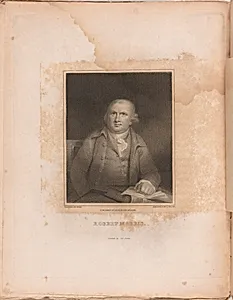
Robert Morris
Medium
Classification
Department
Smithsonian Collection
Museum
Smithsonian American Art Museum
Credit
National Portrait Gallery, Smithsonian Institution
Accession Number
S/NPG.77.136.3.f
Rights
Public Domain
Tags
Art Historical Context
Behold the striking 1816 print portrait of Robert Morris by English engraver James Heath (1757–1834), now housed in the Smithsonian American Art Museum's National Portrait Gallery collection. Captured seated at a table with books and papers nearby, alongside a chair, Morris exudes the poise of a statesman and savvy merchant. This engraving exemplifies early 19th-century printmaking techniques, which allowed for widespread dissemination of revered figures' likenesses, making historical icons accessible to the public. Robert Morris, a Pennsylvania native, was a pivotal "Financier of the American Revolution." As a Continental Congress delegate, he signed both the Declaration of Independence and the U.S. Constitution, channeling his merchant wealth to fund the Continental Army when federal coffers ran dry. Heath's meticulous line work highlights Morris's discerning gaze and scholarly props, symbolizing his intellectual and economic contributions to forging the nation. This artwork invites reflection on the blend of commerce and patriotism that shaped America, reminding visitors of unsung heroes whose ledgers proved as mighty as muskets. A testament to print's role in cultural memory, it bridges 18th-century valor with 19th-century commemoration.