
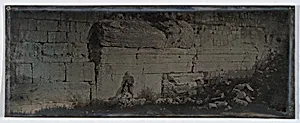
Robinson's Arch, Jerusalem
Medium
Daguerreotype
Dimensions
Image: 3 11/16 × 9 1/2 in. (9.4 × 24.1 cm)
Classification
Photographs
Department
Photographs
Museum
Metropolitan Museum of Art, New York, NY
Credit
Purchase, Mr. and Mrs. John A. Moran Gift, in memory of Louise Chisholm Moran, Joyce F. Menschel Gift, Joseph Pulitzer Bequest, 2016 Benefit Fund, and Gift of Dr. Mortimer D. Sackler, Theresa Sackler and Family, 2016 (2016.608)
Accession Number
2016.608
Rights
Public Domain
Tags
Art Historical Context
Step into the ancient heart of Jerusalem with Joseph-Philibert Girault Prangey's *Robinson's Arch, Jerusalem* (1844), one of the earliest surviving photographs of the Holy Land. This daguerreotype captures the dramatic ruins of Robinson's Arch, a massive stone structure from the Herodian era (first century BCE), part of ancient Temple Mount platform. Named after American explorer Edward Robinson, who it in 1838, the arch evokes the grandeur of biblical times, bridging the Western Wall and the Tyropoeon Valley below. Girault de Prangey, a French archaeologist and pioneering photographer, created this image during his groundbreaking 1842–1844 journey through the Middle East—one of the first Europeans to document the region with a camera. The daguerreotype process, invented just five years earlier in 1839, produces a unique, mirror-like positive image on a silvered copper plate, prized for its exquisite detail and tonal range. At 3 11/16 × 9 1/2 inches, this panoramic view showcases the medium's technical marvel, rendering intricate stone textures and shadows with unprecedented realism. Housed in the Metropolitan Museum of Art's Photographs Department, this work highlights photography's revolutionary role in preserving and revealing history. It transports viewers to a sacred site central to Jewish, Christian, and Muslim heritage, offering a timeless glimpse into Jerusalem's layered past.
About the Artist
Joseph-Philibert Girault de Prangey · 1804–1892
Joseph-Philibert Girault de Prangey (1804–1892), born in Langres, France, as the sole surviving child of Claude Joseph Girault and Barbe Philiberte Rosine Piétrequin, inherited the lordships of Genevrières and Prangey, adopting his full surname in 1825. After studies at Langres college and in Paris, where he earned baccalauréats in letters (1826) and law (1828), he pursued artistic training under ...