
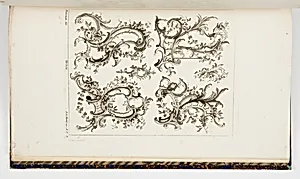
Rocaille Cartouche Designs
mid- 18th century
Classification
Department
Smithsonian Collection
Museum
Smithsonian American Art Museum
Credit
Purchased for the Museum by the Advisory Council
Accession Number
1921-6-317-59
Rights
Public Domain
About this artwork
Research in Progress
Art Historical Context
Franz Xaver Habermann a prolific German printmaker active in Augsburg during the 18th century1721–1796), created these *Rocaille Cartouche Designs* the mid-1700s. As part of the Smithsonian American Art Museum collection, this print exemplifies the ornate Rococo style that swept Europe, blending French elegance with German craftsmanship. Habermann specialized in decorative prints, producing intricate designs that architects, craftsmen, and interior decorators could adapt for furniture, walls, and silverwork. Rocaille motifs—derived from shell-like forms (rocaille in French)—feature the style's hallmark asymmetry, swirling scrolls, foliage, and playful curves, evoking nature's fluidity. Cartouches, elegant oval or shield-shaped frames, were popular for enclosing coats of arms, inscriptions, or allegorical scenes, making these designs practical tools for disseminating high-style ornamentation via affordable prints. Etching or engraving techniques allowed precise detailing, influencing workshops across continents. Though research on this specific work continues, Habermann's output highlights printmaking's role in spreading Rococo aesthetics, bridging art and everyday luxury. Visitors will appreciate how such patterns shaped the lavish interiors of the Enlightenment era, from Versailles-inspired salons to colonial American homes.