
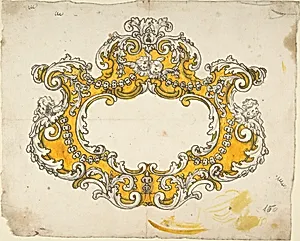
Rococo Cartouche with Cherubs
Medium
Ink and yellow
Dimensions
8-3/8 x 10-1/4 in (21.2 x 26.3 cm)
Classification
Drawings|Ornament & Architecture
Department
Drawings and Prints
Museum
Metropolitan Museum of Art, New York, NY
Credit
The Elisha Whittelsey Collection, The Elisha Whittelsey Fund, 1949
Accession Number
49.50.124
Rights
Public Domain
Tags
Art Historical Context
Nestled in the Metropolitan Museum of Art's Drawings and Prints department, this *Rococo Cartouche Cherubs* is a 18th-century ink and yellow drawing by an anonymousolognese artist. Measuring just 8-3/8 x 10-1/4 inches, it exemplifies the ornamental flair of the Rococo style, which flourished in Italy's Emilia-Romagna region around Bologna. Cartouches like this—elaborate, scroll-like frames—were popular decorative motifs for architecture, furniture, bookplates, and silverwork, often enclosing coats of arms or inscriptions with playful exuberance. The artwork's cherubs, those chubby, mischievous childlike figures, embody Rococo's lighthearted shift from the grandeur of Baroque art toward asymmetry, curves, and whimsy. Rendered in precise ink lines heightened with soft yellow wash, the piece showcases the technical skill of Bolognese draftsmen, who specialized in such architectural ornaments. This intimate drawing likely served as a model for engravers or craftsmen, highlighting the collaborative world of 18th-century design workshops. Acquired through The Elisha Whittelsey Collection in 1949, it offers a window into Italy's vibrant decorative arts, reminding us how everyday elegance was crafted with joy and ingenuity. A charming testament to Rococo's enduring charm!