
Roman emperor
Unknown Artist
17th century (?)
Medium
Bronze
Dimensions
Height (bust): 29 1/2 in. (74.9 cm); Height (column): 48 3/4 in. (123.8 cm)
Classification
Sculpture-Bronze
Culture
French
Department
European Sculpture and Decorative Arts
Museum
Metropolitan Museum of Art, New York, NY
Credit
Gift of J. Pierpont Morgan, 1906
Accession Number
07.225.71a
Rights
Public Domain
Tags
Art Historical Context
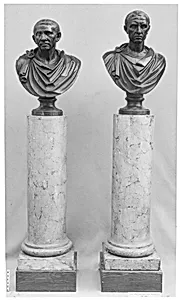
This striking bronze bust of a Roman emperor, atop a tall columnar base, captures the grandeur of ancient portraiture while reflecting 17th-century French artistry. Standing nearly 80 inches tall overall, with the bust itself measuring 29½ inches high, the sculpture showcases a commanding male figure with idealized classical features—strong jawline, furrowed brow, and draped toga—evoking the stoic emperors of antiquity like Augustus or Marcus Aurelius. Crafted in bronze, a medium prized for its durability and rich patina, it exemplifies the lost-wax casting technique common in European workshops, allowing for intricate details in hair, facial expression, and fabric folds. Created by an unknown French artist around the 17th century, possibly during the opulent reign of Louis XIV, the work embodies the era's fascination with Roman heritage. French sculptors often revived classical motifs to symbolize power and legitimacy, adorning palaces and gardens with such busts. Its portrait-like precision highlights the Baroque interest in dramatic realism and heroic scale, bridging ancient Rome and absolutist France. A generous gift to the Metropolitan Museum of Art from financier J. Pierpont Morgan in 1906, this piece now graces the European Sculpture and Decorative Arts department, inviting visitors to ponder the timeless allure of imperial authority reimagined in molten bronze.