
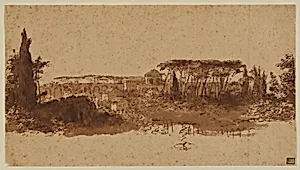
Roman Landscape
mid to late 17th century
Medium
Sepia ink and wash
Dimensions
6 1/4 x 11 1/4 in. (15.9 x 28.6 cm)
Classification
Drawings
Department
Robert Lehman Collection
Museum
Metropolitan Museum of Art, New York, NY
Credit
Robert Lehman Collection, 1975
Accession Number
1975.1.660
Rights
Public Domain
Tags
Art Historical Context
Claude Lorrain, Claude Gellée in France, was a master of 17th-century landscape art, renowned for his poetic depictions of the Roman countryside bathed in golden light. Created in the mid- to late 1600s, *Roman* exemplifies his lifelong fascination with Italy classical ruins and pastoral scenes. Working primarily in, Lorrain drew from the Eternal City's ancient and serene harbors, blending them into idealized visions that influenced generations of, from British landscapists to the Romantics. This intimate drawing, executed in sepia ink and wash on paper (measuring just 6¼ x 11¼ inches), showcases Lorrain's skillful use of monochromatic tones to evoke depth and atmosphere. Sepia wash allowed for subtle gradations of light and shadow, mimicking the luminous effects of his famous oil paintings. As a preparatory study, it highlights his meticulous preparatory process, where drawings served as blueprints for larger compositions. Housed in the Robert Lehman Collection at The Metropolitan Museum of Art since 1975, this work offers a glimpse into Lorrain's studio practice and the enduring appeal of his harmonious, nostalgic views of antiquity. Visitors will appreciate how it captures the timeless allure of Rome's landscapes.
About the Artist
Claude Lorrain (Claude Gellée) · 1604–1682
Claude Gellée was born around 1600 in the village of Chamagne in the Duchy of Lorraine, from which he would take the professional name by which history knows him: Claude Lorrain. Orphaned young, he traveled south to Rome as a teenager, eventually finding his way into the Naples workshop of Goffredo Wals before apprenticing with the Roman landscapist and fresco painter Agostino Tassi around 1622. F...