
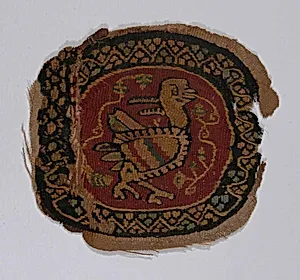
Roundel
Unknown Artist
6th century
Medium
Linen, wool
Classification
Textiles
Department
Islamic Art
Museum
Metropolitan Museum of Art, New York, NY
Credit
Gift of Albert Eugene Gallatin, 1965
Accession Number
65.24.1
Rights
Public Domain
Tags
Art Historical Context
This exquisite 6th-century round, crafted from linen and wool, a glimpse into the rich textile traditions of the early Islamic world. Displayed in the Metropolitan Museum of Art's Art department (gift of Albert Eugene Gallatin, 1965), it delicate bird motifs within a circular frame—a design element known as a roundel, often used to adorn garments, furnishings, or ceremonial objects. These textiles highlight the advanced weaving and dyeing techniques of the era, where wool provided vibrant colors and durability against linen's finer weave. Birds held symbolic resonance in ancient Near Eastern and early Islamic cultures, evoking freedom, paradise, or spiritual themes, though their precise meaning here remains a matter of interpretation. Produced during a pivotal transitional period before Islam's full flowering in the 7th century, such pieces reflect influences from Sasanian Persia and Byzantine trade routes, underscoring textiles' role in cultural exchange along the Silk Road. As a survivor of over 1,400 years, this roundel captivates with its preserved elegance, reminding us how everyday crafts carried profound artistry and storytelling in pre-modern societies.