
Saddle Rug
Unknown Artist
19th century
Medium
Foundation: cotton warp and weft; sheep or goat hair knotting
Dimensions
53 x 27 in. (134.62 x 68.58 cm)
Classification
Textiles-Rugs
Culture & Period
China · Qing dynasty (1644–1911)
Department
Asian Art
Museum
Metropolitan Museum of Art, New York, NY
Credit
The James F. Ballard Collection, Gift of James F. Ballard, 1922
Accession Number
22.100.30
Rights
Public Domain
Tags
Art Historical Context
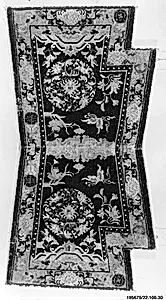
Step into the vibrant world of Qing dynasty (1644–1911) textiles with this exquisite 19th-century Saddle from China, now housed in the Metropolitan Museum of Art's Art Department. Measuring 53 x 27 inches (134.62 x 68.58 cm), this rectangular piece was designed to adorn horse saddles, blending functionality with artistry. Its floral motifs, evoked by the "Flowers" tag, likely draw from China's rich tradition of nature-inspired designs, symbolizing prosperity and harmony in everyday equestrian life. Crafted a cotton warp and weft foundation and knotted pile of sheep or goat hair, the rug showcases a sophisticated knotted-pile technique typical of Chinese rug-making. This method creates a durable, plush surface ideal for the rigors of horseback travel, while the natural wool provides warmth and vibrant color retention. Such textiles were essential for Qing-era nomads, merchants, and officials traversing vast landscapes. A gift from the James F. Ballard Collection in 1922, this anonymous masterpiece highlights the Qing dynasty's fusion of utility and beauty in textiles. It offers a window into China's diverse cultural fabric, where even saddle coverings became canvases for floral elegance.