
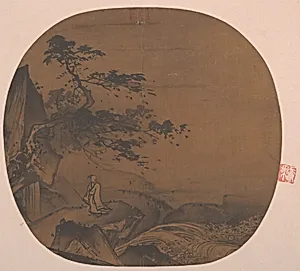
Sage under Windy Tree
18th–19th century
Medium
Fan mounted as an album leaf; ink on silk
Dimensions
9 x 9 5/8 in. (22.9 x 24.4 cm)
Classification
Paintings
Culture & Period
China · Qing dynasty (1644–1911)
Department
Asian Art
Museum
Metropolitan Museum of Art, New York, NY
Credit
From the Collection of A. W. Bahr, Purchase, Fletcher Fund, 1947
Accession Number
47.18.141
Rights
Public Domain
Tags
Art Historical Context
Nestled in the Metropolitan Museum of Art's Asian Art collection, *Sage under Windy Tree is a delicate ink painting on silk from China's Qing dynasty (16441911), created by an unidentified artist in the 18th or 19th century. intimate work, originally a fan leaf now mounted as an album (9 x 9⅝ in.), captures a lone sage beneath a dramatically windswept tree in a vast landscape. The tags—landscapes, men, treeshighlight its essence: a solitary figure in harmony with nature's raw power, evoking timeless themes of contemplation and resilience. In Qing-era Chinese art, such scenes reflect the literati tradition, where scholars-painters used minimalist ink techniques to convey philosophical ideals. The sage, a symbol of wisdom and detachment, stands amid swirling branches, suggesting the transient forces of wind and time—core motifs in Daoist and Confucian thought. Ink on silk allowed for fluid, expressive brushwork, with subtle gradations creating depth in a compact format. Fans like this were everyday luxury items, often gifted or collected, blending utility with artistry. Acquired from A. W. Bahr's collection via the Fletcher Fund in 1947, this piece exemplifies Qing painting's poetic subtlety, inviting viewers to pause and ponder nature's whispers. A window into imperial China's refined aesthetic world.