
Saint Dominic Resuscitating Napoleone Orsini
1467–74
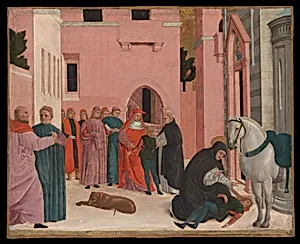
Medium
Tempera on canvas, transferred from wood
Dimensions
14 x 17 1/2 in. (35.6 x 44.5 cm)
Classification
Paintings
Department
European Paintings
Museum
Metropolitan Museum of Art, New York, NY
Credit
The Bequest of Michael Dreicer, 1921
Accession Number
22.60.59
Rights
Public Domain
Tags
Art Historical Context
In the late 15th century, painter Bartolomeo degliri, active in Modena and influenced by the Ferrarese, created *Saint Dominic Resuscitatingone Orsini* between 1467 and 1474. This small tempera panel (originally on wood, later transferred to canvas) measures just 14 x 17½ inches, suggesting it may have been part of a larger altarpiece predella or a devotional piece for private worship. Tempera, an egg-based medium prized for its luminous detail and durability, allowed Erri to render intricate scenes with a jewel-like clarity typical of Quattrocento Italian art. The painting depicts a miraculous moment from the life of Saint Dominic, founder of the Dominican Order: his prayer revives Napoleone Orsini, a boy slain by jealous aunts and left for dogs, which miraculously guarded his body. Figures of men, saints, dogs, and horses populate the composition, blending narrative drama with religious fervor to inspire faith. This legend underscored Dominic's sanctity, promoting Dominican ideals during a time when such hagiographic scenes reinforced Church authority amid Renaissance humanism. Today, at The Metropolitan Museum of Art (bequest of Michael Dreicer, 1921), this work exemplifies early Renaissance storytelling—vibrant, moralistic, and intimate—inviting visitors to ponder miracles that bridged the divine and everyday life.